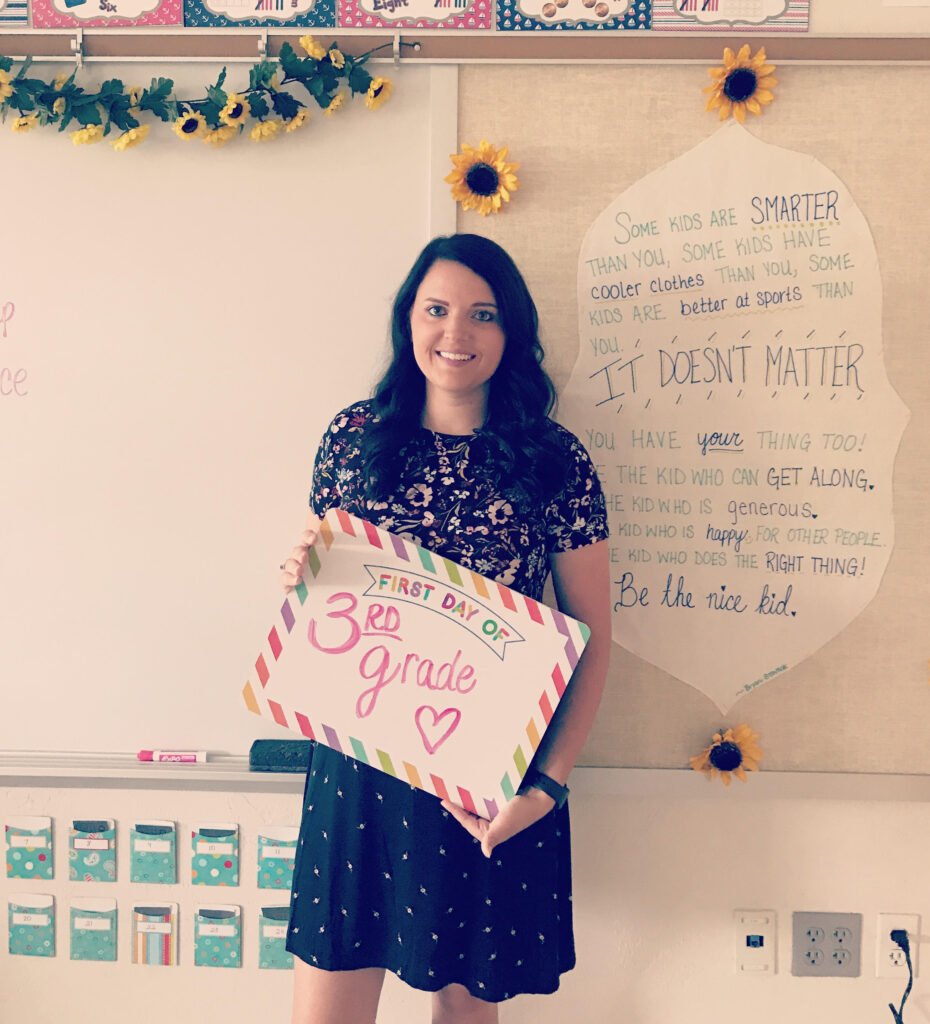
If you are heading into your first year of teaching, or you are currently in it and wondering if you accidentally signed up for the hardest job on earth, let me say this first.
You are not bad at teaching.
You are not failing.
And no, everyone else does not magically have it together.
I walked into my first year thinking that if I planned hard enough, decorated enough, and stayed positive enough, everything would fall into place. I had beautiful lessons, color coded materials, and a Pinterest board that deserved an award.
What I did not have was realistic expectations, boundaries, or any idea how exhausting teaching would be in ways no one warned me about.
So here it is. What I wish I knew before my first year of teaching. The stuff they do not cover in college classes. The things I learned the hard way. And the reminders I still need sometimes.
Classroom Management Matters More Than the Perfect Lesson
I wish someone had told me that a mediocre lesson with strong routines will always beat an amazing lesson with no structure.
I spent way too much time trying to make lessons exciting when what my students actually needed was consistency. Clear expectations. Predictable routines. Boundaries that did not change based on my mood or energy level.
You are not boring for practicing procedures. You are not strict for holding the line. And you are not failing if your first few lessons flop.
Some of the best things you can do early on include:
- Teaching how to enter the room
- Teaching how to ask for help
- Teaching how to transition without chaos
- Teaching how to sit, move, and work independently
These things are not extra. They are the foundation.
Helpful tools that saved my sanity:
- A visual classroom timer – Grab my favorite one here!
- Book bins so students have a spot to store folders, notebooks, and more – Grab the ones I use here!
- Labeled bins for supplies instead of passing things out every five minutes – Grab them here!
Structure is not the enemy of fun. It is what makes fun possible!
You Do Not Have to Grade Everything
I thought good teachers graded everything. I thought if I did not collect it, it did not count.
I was wrong. Very wrong.
Grading everything leads to burnout, resentment, and a never ending pile of papers that follows you home like a sad little ghost.
Some assignments are for practice. Some are for feedback. Some are just to see who was paying attention. Not everything needs a grade in the gradebook.
Things that do not need to be graded:
- Practice work
- Brainstorming
- Exit tickets
- Notes
- Warm ups
Things that can save you time:
- Completion grades
- Spot checking
- Self checking with answer keys
- Digital auto grading when possible
A teacher planner or grading tracker can help you stay organized without overdoing it – Click here for one I love!
Your time matters. Your energy matters. You are allowed to work smarter.
Relationships Will Carry You Through the Hard Days

There will be days when the lesson falls apart. When technology stops working. When students are loud, tired, or just not having it.
On those days, relationships matter more than anything else.
Students do not need you to be perfect. They need you to be human. They need to feel safe, seen, and respected.
Some of the smallest things make the biggest difference:
- Learning names quickly
- Greeting students at the door
- Asking about their interests – then going to see them in action at their sports games or plays!
- Following up when something seems off
You will not connect deeply with every student, and that is okay. But when students know you care, they are far more willing to work with you, even on the tough days.
And yes, this applies even when they are pushing your buttons on purpose.
As the great Rita Pierson said, “Kids don’t learn from people they don’t like.” Watch her TED talk below, it truly changed my life.
You Are Allowed to Say No
This one took me way too long to learn.
You do not need to say yes to every committee, every extra duty, every favor, or every after-school request. Being a good teacher does not mean being available at all times and working for free.
Protect your planning time. Protect your lunch when you can. Protect your evenings when possible.
You are allowed to:
- Leave work at work (and at contract time!!)
- Not answer emails immediately
- Decline extra responsibilities
- Set boundaries with kindness
Burnout does not make you a better teacher. Rest does.
Social Media Is Not Real Life
I wish I had known how much comparison would mess with my confidence.
Social media shows highlight reels. It does not show the messy middle. It does not show failed lessons, exhausted teachers, or the learning curve everyone goes through.
Your classroom does not need to look like Instagram. Your lessons do not need to go viral. Your worth as a teacher is not measured by aesthetics.
Focus on what works for you and your students. That is enough.
Your First Year Is About Survival, Not Perfection
This is the most important one.
Your first year of teaching is not about being amazing. It is about learning. It is about figuring things out. It is about getting through the year and coming back a little stronger next time.
You will make mistakes. You will have moments you wish you could redo. You will question yourself more than once.
That does not mean you chose the wrong career. It means you are learning how to teach.
Give yourself grace. Celebrate small wins. Ask for help when you need it. And remember that every teacher you admire was once exactly where you are now.
Final Thoughts for First Year Teachers
If you are in your first year and feeling overwhelmed, exhausted, or unsure, please hear this.
You are not failing.
You are learning.
And you are doing something incredibly hard.
Teaching is not easy. But it is meaningful. And with time, support, and realistic expectations, it gets better.
If this post helped you, share it with a new teacher who needs it. Save it for the hard days. And remember that you are not alone in this.
You have got this. Even when it does not feel like it.
~ Jade